About
Site Directory
Copyright © 2026 www.yabsta.gg
All Right Reserved
powered by 

Copyright © 2026 www.yabsta.gg
All Right Reserved
powered by
The House, parts of which date to the early 13th or late 12th centuries, has been altered, reduced and added to over the years with major changes in Tudor, Queen Anne, Regency and Victorian times.
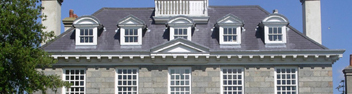
The most impressive part is the front, regarded as the finest example of Queen Anne Colonial architecture in Britain, which was built between 1714 & 1718 at the bequest of Sir Edmund Andros, the 1st Governor of New York. Though it has been suggested by many Experts that this is the work of Sir Christopher Wren who was pracising in Westminster at the time ,there is absolutely no proof that he was the architect. Sir Edmund was remarkable man, as he was at the same time Lt Governor & Bailiff of Guernsey, Lord of Alderney and at one time or another Governor of North Carolina, Massachusetts, Virginia, New England, New Jersey and New Plymouth.
The House came into his grandfather's family via marriage and returned to the de Sausmarez family in 1748 by purchase. The money to pay for this came from the bounty of the capture of the Nusetra Senora da Capa Donga, the world's richest treasure ship. (See Philip de Sausmarez) Philip's father, Matthew, had several sons, one of whom, a doctor, was the father of James Saumarez, later to become a distinguished Admiral and Baron and who was one of Nelson's Band of Brothers. Matthew was one of the first of the Privateers who used the Freeport in Guernsey to such great effect causing havoc amongst the French, Spanish and Dutch shipping when Britain was at war with them.
The family sprang originally from Scandinavia and swept down through Europe finishing in the North of France, and being Norsemen, called that part Normandy. After 200 years they moved to Jersey, from where after a further 200 years, they came to Guernsey between 1200 & 1254. Part of the family returned to France preferring their estates on the Cotentin Peninsular. Since then they have been in and out of the affairs of the island since holding such positions as Bailiff, procurer and deputy, as well as Hereditary Seigneurs and Echanson heredetaire du Roy d'Angleterre and Chatelaine de Jerbourg, with the job to keep the fortification in good order on the Jerbourg peninsular, more than once forming a safe refuge from invasion for the people of St Martin.